|
A new analysis of Texas property tax levies offers an early indication of the issues likely to receive attention during the 90th Texas Legislature.
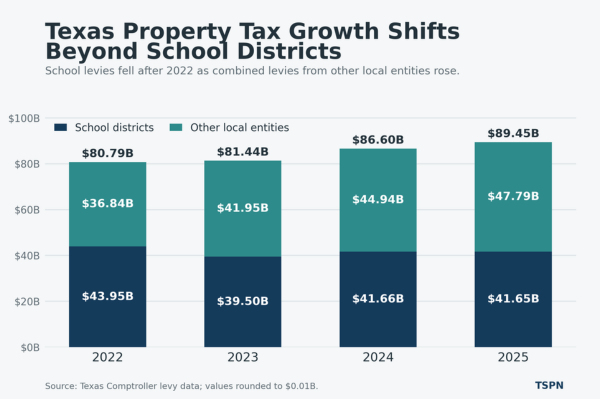
As reported by The Texan, total property tax levies in Texas reached approximately $89.4 billion in 2025. School districts accounted for approximately $41.65 billion of that total. While school districts remain the largest individual component of the property tax system, recent trends show their share of the statewide levy declining as levies collected by other taxing entities continue to grow.
School district levies fell by nearly 10% in 2023 following additional state-funded tax-rate compression and an increase in the mandatory homestead exemption. After increasing in 2024, total ISD levies remained essentially unchanged in 2025, declining slightly from approximately $41.668 billion to $41.65 billion according to the Texas Comptroller tax-rate and levy data.
The recent trend reflects policy decisions made over several legislative sessions. Since 2019, the state has committed increasing amounts of general revenue to compress school district M&O tax rates. Voters have also approved successive increases in the mandatory school district homestead exemption, which reached $140,000 for general homesteads and $200,000 for homeowners who are over 65 or disabled beginning with the 2025 tax year.
A separate analysis released by the office of Senate Local Government Committee Chair Paul Bettencourt found that approximately 39.2% of Texas homesteads paid no school district property taxes in 2025. That included approximately 25% of general homesteads and nearly 61% of over-65 and disabled homesteads.
Together, these findings may shape several areas of discussion during the 2027 legislative session.
First, lawmakers are likely to consider whether to continue or expand school tax compression. Governor Greg Abbott and other state leaders have indicated that additional property tax relief will remain a priority. Joint budget instructions issued in July call for protecting education funding while advancing additional property tax reform.
Second, continued growth in the total levy may direct more legislative attention toward cities, counties and special districts. Previous proposals have sought to lower voter-approval revenue thresholds or otherwise limit the annual growth of property tax collections for those entities. The latest data could provide additional support for revisiting those proposals.
Third, lawmakers will have to consider the ongoing state cost of maintaining the reductions already enacted. The state must fund existing compression and homestead-exemption adjustments before determining how much revenue is available for additional tax relief or other budget priorities.
The discussion may also affect how local tax-rate and bond elections are viewed. Districts considering a voter-approved tax rate election, VATRE or additional debt may need to communicate how the proposal relates to state-mandated compression, the district’s existing tax rate and the specific operating or facility needs the election would address.
The data does not predetermine what lawmakers will enact in 2027. It does, however, establish a framework for the coming debate: school district levies have declined or stabilized, the overall property tax levy continues to increase, and maintaining or expanding school tax relief will require an ongoing state financial commitment.
|