|
|
|
|
|
|
Efforts to revisit Plyler v. Doe decision raise questions for schools across the country
|
|
|
|
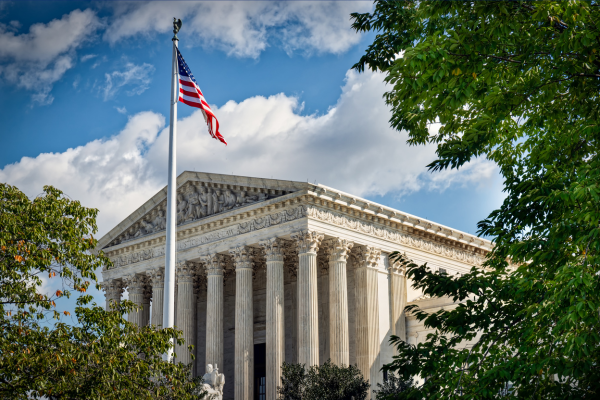
This past week, the federal House Judiciary Committee held a hearing on the “adverse effects” of a decades-old Supreme Court decision, Plyler v. Doe (1982), which guarantees access to free public education for all children regardless of immigration status. Much of the testimony centered on the costs of providing these services weighed against the benefits of having an educated population, regardless of immigration status.
Critics of the ruling argued that states and localities bear an unsustainable financial burden educating children who are in the country unlawfully, and that Congress — not the Supreme Court — should have the authority to set such policy. Defenders of Plyler, however, contended that denying children access to education would create a larger societal cost, pointing to research suggesting that uneducated populations are more likely to face unemployment and poverty.
Additionally, earlier in the week, Trump administration officials held a meeting with a group of Texas lawmakers where they discussed state-level efforts to end public education funding for the estimated 111,000 undocumented students in the state.
This is not the first time the case has been questioned. Last year, the Trump administration published guidance limiting federally funded preschool and adult education programs to citizens and legal residents. In Virginia, the state education department created (and has now abandoned) a policy to exclude undocumented students from enrollment in federally-funded CTE programs with similar confusion occurring in Iowa and Georgia. In Texas, legislation to limit public education funding for undocumented students was filed during the 2025 (89th) Legislative Session but did not advance. Additionally, Governor Greg Abbott stated in 2022 that he believed a challenge to the Plyler v. Doe ruling was coming.
For now, the ruling remains the law of the land, but this past week's events signal renewed focus among some lawmakers to revisit a legal precedent that has shaped American education policy for more than forty years. Any change could have significant implications for Texas public schools, including shifts in enrollment and state funding.
|
|
What We're Watching:
Texas Senate releases full list of 2026 Interim Charges: The Texas Senate released a more detailed list of interim charges today, with topics affecting public school districts being identified for the Senate Education Committee, the Local Government Committee, and the Select Committee on Religious Liberty.
Education Committee: The Senate’s charges reflect a continued focus on strengthening core academic systems and school operations from HB 2. In addition, new policy areas were highlighted:
- Improving school transformation talent pipelines
- Maximizing instructional time
- Examining shifts in student enrollment across public schools
Select Committee on Religious Liberty: Among other charges, this committee will monitor the implementation of SB 10 (Ten Commandments display) and SB 11 (Prayer in Schools).
Local Government Committee: Similar to the House’s focus on property tax relief, the Senate Local Government Committee will examine efforts to lower homeowner’s school property taxes and review the impact of homestead exemption increases (SB 4 and SB 23).
|
|
Latest News & Guidance from TEA:
A C A D E M I C S
- Texas Civics Training Programs Implementation: TEA announced implementation of the Texas Civics Training Program, requiring each campus to have at least one teacher and one campus leader complete training to support improved civics instruction and student understanding of government. Elementary training begins summer 2026, with secondary in summer 2027, and eligible teachers may receive a $600 stipend.
- Suspension of Instruction and Activities related to Cesar Chavez: TEA announced guidance directing districts to suspend instruction and activities related to Cesar Chavez, including canceling or redirecting events tied to the March 31 optional holiday and removing related instructional materials. The agency also stated that districts will not be found out of compliance for omitting Chavez-related TEKS while adjustments are made.
A D M I N I S T R A T I O N
- New TSDS Core Collection: Teacher Vacancy Collection: TEA announced a new TSDS Teacher Vacancy Collection, required under House Bill 2, to collect data on vacant teaching positions beginning with the 2026–27 school year. Districts will report position-level vacancy data annually for the full school year (Sept. 1–Aug. 31), with the first submission due September 23, 2027, and TSDS available to load data starting August 3, 2026.
- Senate Bill 1191 Calculation of High School GPA: TEA announced guidance on Senate Bill 1191 establishing a statewide method for calculating high school GPA, replacing local weighting systems. Proposed rules are open for public comment through April 20, 2026, and would apply beginning with students entering grade 7 in 2027–28.
F I N A N C E
- Release of FY 2025 Preliminary Compliance Reviews for IDEA-B MOE: TEA announced the release of FY 2025 preliminary IDEA-B Maintenance of Effort (MOE) compliance reviews, identifying whether districts meet federal special education spending requirements. School districts must respond by April 10, 2026, if they disagree with TEA's results.
- Local School Districts Revenue and Funding Decisions: TEA announced new resources to support local school district revenue and funding decisions, highlighting strategies districts can use to maximize available funding aligned to academic priorities. The guidance emphasizes that local decisions can significantly impact total funding, and provides tools, a webinar, and an Excel funding model to support planning. These resources do not, however, provide much guidance on implementation costs of pursuing these reforms.
- HB 2 Implementation: CTE Certification Reimbursement to Districts: TEA announced guidance under House Bill 2 for CTE certification reimbursements to districts. Districts may request reimbursement for eligible certification fees for CTE teachers earning standard certification between Sept. 1, 2025, and June 1, 2026. Requests must be submitted per educator through TEA’s form by June 12, 2026, with payments issued in early August, subject to available funding.
- HB 2 Implementation: Teacher Certification Incentive: TEA announced guidance on the House Bill 2 teacher certification incentive, which provides a one-time $1,000 payment to districts for each eligible classroom teacher who completes certification requirements. Districts must submit requests per educator through TEA’s process, with submissions due June 12, 2026, and payments expected in early August, subject to available funding.
|
|
|
Your Texas School Policy Network Team
|
|
|
|
|
|
|
|