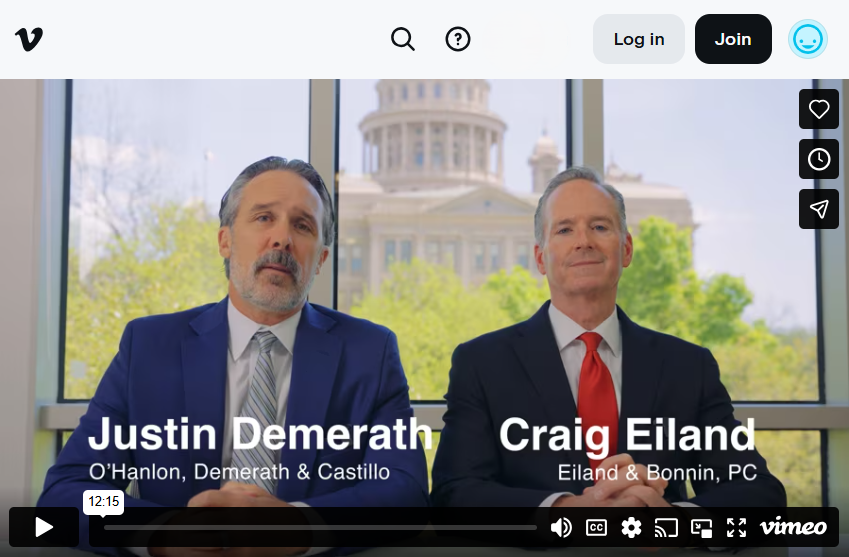
| Click to watch our School Board update video |
|
|
| Copy & paste this password for access: V1m3oPw@d |
|
|
|
|
|
|
|
|
|
|
|
| | | April 2025 Quarterly Client Update |
|
| Dear Superintendent and Board Members,
We are writing to provide you with an important quarterly video update on recent developments in the social media litigation and to ensure your Board is fully informed at this critical stage. We request that you kindly consider airing it in executive session at your next meeting.
As the cases continue to progress toward the first school-district trials, several significant events—including the first bellwether jury verdict, a major state enforcement action, and key developments in Washington DC—have begun to shape how these cases will be tried and ultimately resolved.
Because these developments have strategic implications for your District’s claims, we have prepared a short, confidential video briefing and respectfully recommend that it be reviewed by board members individually or by your Board in executive session at your next meeting.
|
|
| Attorney Client Privileged Communication - This correspondence and accompanying video contains litigation strategy and is intended for School District client viewing only and cannot be shared with the public or non-client School Districts. Please DO NOT share this letter or play the Board Update Video in an open session of a school board meeting. If played at a school board meeting, only do so in Executive Session. |
|
| |
| | Overview of the California Trial |
|
| On January 27, 2026, a jury trial began in Los Angeles, California, before Judge Carolyn B. Kuhl. This was the first major “test case” or “bellwether” in the country about whether social media companies can be held responsible for alleged social media addiction and related mental health harms in young people. It is important to note that this “test case” was one selected by the defendants as one of their better cases to go to trial.
The plaintiff is a 19‑year‑old individual identified as K.G.M., who claims she became addicted to social media starting at age six and that this addiction led to serious mental health problems. This was NOT a school district case, but an individual case brought solely by the young woman. Therefore, the evidence regarding whether the platforms are defective or addictive is relevant to school district claims, but the types and amounts of damages are entirely different.
Just before the trial started, Snapchat and TikTok reached confidential settlements with the plaintiff, so the trial went forward against:
The trial lasted about six weeks, from late January through mid‑March 2026. During that time, the jury heard opening statements, live witnesses in the courtroom (including Mark Zuckerburg), video testimony recorded earlier, and then final instructions and closing arguments on March 11, 2026. The judge strictly limited how much time each side could use to 45 hours each, so both sides had to be very selective about which witnesses and documents they presented.
Even though only one person (the plaintiff) was suing in this case, the jury heard from many different types of witnesses and saw a large number of internal company documents. At a high level, the jury heard from:
The plaintiff and the plaintiff’s family The plaintiff described how she used social media over many years, how she felt about herself, and what was happening at home and at school during that time. The plaintiff’s mother, Karen, gave sworn testimony that was read to the jury. She was asked what warnings she saw (if any) from the apps and how closely she watched her child’s phone and social media use.
Doctors and mental health professionals The plaintiff’s own doctors and therapist (including a psychiatrist and a therapist who saw the plaintiff many times) described long‑term struggles with anxiety, depression, family conflict, bullying, and school stress. The plaintiff’s lawyers also hired specialists in addiction and child psychiatry. These doctors told the jury that certain design choices in apps like Instagram and YouTube — such as endless scrolling, autoplay, “likes,” and appearance‑altering filters — can lead some young people to use these apps in a compulsive way and can make problems like depression, anxiety, self‑harm, and body‑image issues worse. Meta hired its own psychiatrist to examine the plaintiff. That doctor told the jury that the plaintiff’s mental‑health challenges were better explained by things like long‑standing social anxiety, family conflict, and bullying, and not by “addiction” to social media.
School staff The jury watched video testimony from the plaintiff’s high‑school counselor and assistant principal at an arts‑focused charter school. They described the plaintiff as bright and creative but also very anxious and often struggling with friendships and family stress. They also testified that, during the time they worked with the plaintiff, neither the plaintiff nor the plaintiff’s mother ever said that the plaintiff was addicted to social media or that Instagram or YouTube were causing the plaintiff’s mental‑health problems.
Company leaders and engineers Mark Zuckerberg, the CEO of Meta, testified about how Meta makes money, past goals to increase the amount of time people spend on the platforms, and internal documents about reaching “tweens” (roughly ages 11–12) and keeping them on the platforms for many years. Senior engineers and researchers from YouTube testified (mostly by video) about how YouTube’s recommendation systems work, internal research on “problematic use,” and YouTube’s efforts related to teen safety and well‑being. Meta also called internal witnesses to talk about teen‑safety tools such as “Quiet Mode,” time‑management settings, and parent guides, as well as partnerships with outside safety organizations.
Former insiders and child‑online‑safety experts The plaintiff’s lawyers called a former Meta engineering and safety leader, Arturo Bejar, who described himself as a whistleblower. He testified that he warned Meta leadership that teens were being harmed on Instagram at worrying rates and that, in his view, company leaders put growth ahead of safety. Meta’s lawyers questioned his limited part‑time role in later years and pointed out that he is not a medical expert and did not have access to detailed budget and staffing numbers. They also called Brooke Istook, a child‑online‑safety specialist, who spoke in general terms about how difficult it can be for parents to find, understand, and use safety and parental‑control tools on major social‑media platforms.
In short, the jury heard from many witnesses over about six weeks, and saw both outside research and internal documents from Meta and YouTube. |
|
| Main Issues and Arguments in the Trial |
|
| Although this case is specific to one individual plaintiff, the main issues give us a preview of what we can expect in school‑district cases.
1. App Design vs. Online Content
The judge drew a clear line between: How the apps are designed and how they work (things like endless scroll, autoplay, notifications, recommendation systems, and filters), and What individual users post or see (videos, photos, comments, bullying posts, etc.).
The judge allowed evidence about the addictive design and operation of the apps — for example, whether features like infinite scroll and autoplay are built in ways that keep young people on the apps longer and make them harder to put down.
At the same time, because of a federal statute (Sec. 230 of the Federal Communication Decency Act) that protects Big Tech for the content posted on their platforms, she limited broad evidence about how much harmful content (bullying, sexual content, etc.) is on the platforms overall. The jury could hear specific examples of bullying or harmful content only to show, for example, that a young person kept coming back to the app because they are addicted, even after “bad experiences,” but not to turn the case into a general debate about all the content on the internet.
This same distinction between design and content is also being used in the federal cases that include your district, so this trial gives us an early look at how the defendants and other judges may handle that balance of “features vs content” evidence.
2. What the plaintiff’s side argued
The plaintiff’s legal team argued that Meta and YouTube intentionally designed and fine tuned Instagram and YouTube to keep users, including children and teens, on the apps as long as possible. They focused on features such as: Endless scrolling and continuous video feeds; Videos that automatically play the next clip; Frequent alerts and notifications; Algorithms that constantly suggest new content; “Likes,” comments, and view counts that encourage checking and re‑checking; and Filters and editing tools that change how a person looks on camera.
Their experts told the jury that because of children and teens developing brains, especially for vulnerable young people, these features can lead to compulsive, unhealthy use that can either create new mental‑health problems or make existing problems worse.
The plaintiff’s side pointed to: Internal company documents about “problematic use” and “addiction,” Internal presentations that treated “tweens” as especially valuable long‑term users, and Internal and external research on teens’ mental health and heavy social‑media use,
to argue that the companies knew about the risks but kept pushing designs that increased engagement anyway.
For the plaintiff personally, they argued that the plaintiff’s heavy Instagram use, strong focus on appearance with filters, late‑night scrolling, and trouble putting the apps down were not just “normal teen behavior,” but part of a harmful pattern driven by how the apps were built.
3. What the companies argued in response
Meta and YouTube argued that: The plaintiff had serious challenges long before social media became a big part of the her life — including social anxiety, shyness, bullying at school, family conflict, and academic struggles, especially in math. Many of the worst events in the plaintiff’s life, including a major school discipline incident and a physical assault, had nothing to do with Instagram or YouTube and would have caused distress regardless of social media. The plaintiff began seeing a therapist at age 3, because of her parents divorce, before ever being exposed to Instagram or YouTube. The plaintiff’s own medical and counseling records, covering nearly 10,000 pages, say very little about YouTube and do not diagnose the plaintiff as “addicted” to YouTube. In at least one record, YouTube appears as something the plaintiff used to help fall asleep when anxious, not as a source of harm. In early court forms filed under oath in 2024, the plaintiff twice checked boxes saying the plaintiff did not have claims against YouTube, even though YouTube was later added to the case.
YouTube also presented internal viewing data suggesting that, over several years, the plaintiff watched YouTube for a relatively modest amount of time per day on average, with only a few minutes of that linked to autoplay or Shorts (YouTube’s version of short, scrollable videos). They argued this did not fit the idea that the plaintiff was “hooked” specifically by Shorts or autoplay.
Both Meta and YouTube highlighted their safety and parent tools (such as Instagram’s parent guide and time‑limit settings, and YouTube’s various controls and “well‑being” efforts) and argued they are investing heavily in making the platforms safer for teens. The plaintiff’s mother, in contrast, testified that she did not really use these tools, did not fully understand how the apps worked, and did not recognize the potential harms until she saw a news program years later. This gap between “tools on paper” and what busy parents actually use in real life is important for school‑district cases as well. |
|
| | $6,000,000 Total Award in an Individual Case
On March 25, 2026, the jury returned its verdict. In summary, the jury found that:
Liability: Both Meta and Google were negligent in the design of their social media platforms, The platforms were dangerous for minors, They knew the platforms were dangerous if used by minors, They knew users would not know the dangers of the platforms, They failed to warn the public of those dangers, A reasonable person would have warned the public, and The failure to warn was a substantial factor in the damages claimed.
Damages
The jury awarded $3,000,000 in compensatory damages to the plaintiff. These compensatory damages are intended to compensate her for harm she suffered, such as past and future medical care, pain and suffering, and other personal losses.
Other important findings
The jury found that Meta and Google acted with malice, oppression, or fraud. Based on that finding, the jury awarded $3,000,000 in punitive damages, in addition to the $3,000,000 in compensatory damages, for a total verdict of $6,000,000. Punitive damages are a separate category of damages that are not meant to repay the injured person for specific bills or losses, but instead to punish, especially wrongful conduct, and to deter the defendant and other companies from engaging in similar conduct in the future. Punitive damages are reserved for situations where the jury finds a higher level of misconduct, such as malice, oppression, or fraud.
This young lady’s individual case is one of thousands filed in the California state court system and is separate from the federal social media multidistrict litigation (MDL) pending in the U.S. District Court for the Northern District of California, where your case is filed along with hundreds of other school districts across the country. This individual’s trial does not decide your district’s case, but because it is the first trial of its kind, it may influence how social media companies, courts, the public and other parties view and approach similar claims going forward.
We explain these verdict details and what they may mean for school district cases in more depth in the accompanying video update. |
|
| Why This Matters for Your District’s Case |
|
| This California case involves one individual plaintiff. It does not decide your District’s case. Although it is the first full trial of its kind, it may influence: How courts decide what evidence can be shown to a jury about app design versus online content. This affects how we can present evidence about student addiction, mental health, cyberbullying, self‑harm content, and similar issues in a school district case. How much experts are allowed to rely on internal company data (for example, app‑usage logs) when they talk about how often students use these platforms and whether that use is harmful. How juries react when they are asked to weigh two very different stories: one that blames app design for youth mental‑health harms, and one that points instead to family, school, and individual factors.
From a school‑district perspective, we see some encouraging signs: The judge allowed the jury to see a significant amount of internal company material about youth‑focused strategies and internal concerns about “problematic use” which is social media’s term for addiction. The jury heard detailed testimony from both sides’ mental‑health experts about whether engagement‑boosting features can affect youth mental health — exactly the kind of testimony we expect to be central in the school‑district cases. Testimony from school counselors and administrators about what they saw (and did not see) in this student’s behavior and records gives us a useful model for how to use district‑level witnesses and records to show how social media affects students, counseling services, and school climate.
At the same time, the social media companies’ focus on family responsibility, pre‑existing conditions, and school‑environment stressors shows us the kinds of arguments we can expect them to make about why school districts, parents and society and not the platforms, should be blamed and left to bear the costs of student mental‑health crises. |
|
| New Mexico AG Secures $375 Million Award Against Meta |
|
| Additionally, a separate verdict came in on March 24th where the Attorney General of New Mexico sought to hold Meta (Facebook and Instagram) responsible for failing to protect children from child predators online. The New Mexico verdict resulted in a $375 million award based on findings that Meta violated the state’s consumer protection laws through deceptive and harmful practices tied to the design and operation of its social media platforms. The case is significant because it reflects another jury’s willingness to credit evidence that Meta’s products were intentionally engineered in ways that could harm children and teenage users, reinforcing core liability themes around addiction, foreseeability, and corporate knowledge that are central to the broader social media litigation.
At the same time, the verdict is not directly comparable to school district cases in the MDL: the New Mexico action was brought by the state under its consumer protection statute and sought statutory penalties for deceptive practices, whereas school district claims focus on recovering damages for institutional harms, such as increased counseling, staffing, and administrative costs, under different legal theories like public nuisance and negligence. Accordingly, while the verdict is an important indicator of how juries may view Meta’s conduct, it does not translate directly into a per‑student or per‑district damages framework.
The New Mexico case is not over. The second phase will begin on May 4th where the judge, without a jury, wil, hear evidence whether Meta has created a “public nuisance” and if so, how to “abate” the public nuisance Meta has caused and prevent future damage or violations of the state law. |
|
| Our Work in Washington, D.C. |
|
| In addition to our work in the courts, our firms have also been actively advocating for public schools in Washington, D.C. On March 5, 2026, Craig Eiland was present before the U.S. House Committee on Energy and Commerce which was considering bills that could impact your case and similar cases in the future. This is the oldest standing committee in the House of Representatives and one of the most powerful. It oversees many of the big issues that affect our economy, including technology, the internet, and children’s health and safety. The hearing focused on a proposed federal law that is meant to protect children and parents online. One important part of the proposal would make the new federal law override any conflicting state law. In simple terms, this could limit or wipe out certain legal rights that states — and public school districts like yours — currently have to bring cases against large social media companies. Because of that concern, we have taken a broad, “all‑fronts” approach to protect our school‑district clients. We have: Met with and called state and federal lawmakers, Worked with school districts with Representatives on the committee to contact their Representative to express concerns about how this bill could harm public schools, and Mr. Eiland was able to meet with and explain directly to several Members of Congress why your cases matter and why school districts must keep the right to hold social‑media companies accountable. This helps build a clear record of congressional intent, showing that school‑district claims are important and should not be quietly erased by new federal legislation.
In our video update is a clip of Texas Congressman Randy Weber. He spoke during the hearing about his concern that the legal claims raised by Texas public school districts could be harmed by this bill, that it could override states’ rights, and that schools in his district have told him they had concerns about the bill. He emphasized that our children and families are too important, and that large technology companies must be held responsible when their products cause harm. We are continuing to closely monitor this bill and any similar proposals, and we will keep advocating to make sure public school districts keep their ability to bring legal claims against these companies and hold them responsible when their products harm students and cause unnecessary expenditures of taxpayer dollars. Depending on where your district is located and how things progress, we may be contacting you asking you to contact your member of Congress and express concern or opposition to legislation if it will negatively impact your district’s rights and remedies. |
|
| The “Coverage Wall”: Insurance Companies Draw a Line |
|
|
|
|
|
|
|
|
|
|
|
| Another recent development that affects how these cases move forward is what we are calling the “coverage wall” – a court ruling about whether Meta’s insurance companies have to pay for its legal defense in the social media lawsuits.
On February 27, 2026, a Delaware state court ruled that Meta’s general liability insurers do not have to defend Meta in the nationwide social media litigation. The court focused on how Meta’s platforms were allegedly designed, and it treated those design choices as deliberate business decisions made on purpose, not as “accidents.”
Most large companies, including school districts, buy commercial general liability (CGL) insurance. These policies are usually written to cover harm caused by an “occurrence,” which is almost always defined in everyday terms as an accidental event. In simple terms: if something is a true accident, the policy must cover the damage; if the harm flows from a choice the company made on purpose, it usually does not. Courts in other states have said that insurance coverage turns on what actually happened, not on the legal label, and that calling intentional conduct “negligence” does not turn it into an accident that triggers this kind of coverage.
In Meta’s case, the Delaware court looked past the use of negligence words in the underlying lawsuits and asked what the lawsuits really said. The lawsuits describe Meta as having intentionally built and fine tuned features like endless scroll, autoplay, notifications, and engagement‑driven algorithms to keep children and teens on the platforms longer and to drive business results. The court found that, under California law (which governed the insurance policies), those allegations add up to intentional conduct, not an unforeseen accident, even if the real‑world consequences for youth mental health are severe and wide‑ranging.
The court also asked whether the complaints alleged any separate, unexpected event that broke the chain between Meta’s design choices and the harms (for example, some truly independent accident or third‑party act). It concluded they did not. Instead, the alleged harms, addiction‑like use, depression, self‑harm, and similar injuries, were framed as the predictable result of how the platforms were designed and operated, not as something that happened “out of the blue.”
Because the court found that the underlying allegations do not describe an accident at all, it held that Meta’s insurers have no duty, under these insurance policies, to provide a legal defense to Meta. Having reached that conclusion, the court did not need to analyze other policy exclusions or defenses. For school districts, this Delaware insurance ruling matters for two main reasons. It reinforces a key theme in your cases: judges are willing to treat the design of social media platforms as conscious business choices rather than users becoming accidentally addicted. Secondly, if social media companies cannot pass their legal defense costs and potential verdicts on to their insurers for these design‑related claims, they may have to pay those costs directly, which can put greater financial pressure on them as youth, parent, and school‑district cases move forward and affect how quickly, and on what terms, they choose to resolve those cases. |
|
| Update on the Federal School District Cases (where your case is filed) |
|
| Your District’s case is part of a large group of school‑district cases that have been combined in one federal court in California, in front of Judge Yvonne Gonzalez Rogers. Hundreds of school districts across the country are part of this group.
In that federal case: The judge has set the first school‑district bellwether “test” trial for Summer 2026 (June 12th is currently reserved). A second school‑district bellwether “test” trial is scheduled for October/November 2026. There will be six school‑district bellwether “test” trials in total under the current plan. Each one is expected to last about four weeks for the school district’s side of the case and about four weeks for the companies’ side. The Court will keep the trials going as long as the schedule will allow going into 2027.
These bellwether “test” trials will focus on district‑wide harms, such as: Counseling, mental‑health, and phone separation costs, Staff time responding to social‑media‑related issues, Absenteeism and classroom disruption, and Discipline and safety burdens on campuses.
They are very different from an individual injury case like the one in California, but the evidence about how the platforms are designed will overlap. |
|
| | With this letter, we are providing a confidential video update that also walks through:
We will continue to monitor post-trial motions, any appeals, and further orders in both the Los Angeles individual cases and the federal school district litigation, and we will send additional written updates as additional trials and significant developments occur.
In the meantime, if you have any questions about this trial or about your district’s case, please reach out at any time. We are here to support you and your district and welcome any questions or concerns you may have. Thank you again for your trust in our firms. We will continue to keep you informed as these cases move forward.
Sincerely, |
|
| | A. Craig Eiland EILAND & BONNIN, P.C. 1220 Colorado, Suite 300 Austin, Texas 78701 Telephone: (512) 482-3260 Facsimile: (512) 482-3261 Email: ceiland@eilandlaw.com |
|
|
|
|
|
|
|
|
|
|
|
| | | |
|
|
|
|